Saturday, August 11, 2012

Paracas

These photos are a few days old now. They are from the boat ride to the Ballestas Isands off the coast of Paracas in southern Peru. We tooled around the rocky islands to see birds and such, all of which are endangered or nearly endangered. The birds have found a good home there, though, and they live there amongst the sea lions and penguins, all in perfect harmony. It seems they have been there forever and will be there forever.
The birds poop a lot and all over the place. The rocks are covered in poop. The guide told us that the poop, technically called guano, was harvested in 2004 and again last year. In those seven years, the guano piled up to four feet high in some places. Locals live on the island for a few months during harvesting time to shovel up the guano and ship it away to be used as fertilizer.
The iPhone camera didn't capture very well just how many birds (and bird poop) there were, but you can see the amazing rock formations and evidence of erosion over many, many years.


From Cusco to Urubamba

Ollantaytambo

Today we visited an archeological site in the town of Ollantaytambo, about 11 miles from our hotel in Urubamba. The site consists of a stone fortress that climbs up the side of a steep mountainside. It was built by an Incan emporer in the mid-15th century. The same emporer also led the construction of terraces near the town, which was home to lncan nobility. Later, around 1536, the site was used as a fortress again the Spanish Conquistadors.

There exists also a legend that explains the connection between the town and the Incan Empire. The legend says that a beggar walked into the town of Ollantaytambo before the time of the Incas. The chief of the town was kind to the old man, so the old man repaid the chief by offering him his walking stick. Later, when the chief's son was born, the walking stick turned to gold. When the boy grew up, he took the golden stick and left Ollantaytambo saying that wherever the walking stick sank into the ground would be the location of the Incan Empire. And that, the legend concludes, is how the Incan Empire began.

There are little canals running all through the base of the ruins as well as through the cobblestone streets of the town. The water comes from melted snow atop the high mountains surrounding the area.

Here are a ton of photos I took as Dad and I crept up and back down the ruins.


The Nazca Lines

The Nazca Lines are strange. They were discovered in 1927 when someone was hiking across some hills in this desolate, sandy desert in sourthern Peru. Can you imagine looking down from the hilltop to see the image of a waving astronaut carved into the earth below? And then a condor and a hummingbird and a monkey and dog.
There are images of all kinds of animals and dozens of geometric shapes and lines etched into the earth. It is believed that the lines were created by people of the ancient Nazca culture around 600 A.D. They apparently cut away the red top layer of earth to expose the white rock beneath.
Of course, the big question is why did they do it? Some theorize that the shapes and lines correspond with constellations and other astronomical points of interest. Others believe the shapes were designed as a huge map pointing the way to water sources. My favorite theory is that the area served as a sort of landing strip for extraterrestrial crafts, and the shapes and lines were there as welcome signs and landing guides.
Personally, after spending just a day in this place, I think it is possible that the people were really bored and wanted to express themselves creatively through the art of earth carving. Also, it is possible that people in ancient times were always carving away at the surface of the earth. Only in Nazca were the designs preserved, though, because there is little to no wind or rain to erode them away.
Here are a few photos that I took from the airplane window:


Friday, August 10, 2012

Trains, planes, and automobiles (and boats)

My father and I have embarked upon a father-daughter trip to Peru. It was his idea, and, of course, I agreed. There have been a few stressful moments, but all in all, we've carried on together pretty well so far.

It has been a busy trip, even before we made it to Peru. We awoke at 3 a.m. Tuesday morning to arrive at DFW airport in time for our 6 a.m. flight on the ever uncomfortable Spirit Airlines. This ride, it turns out, was only the first of may uncomfortable rides we have endured on the journey. We arrived in Ft. Lauderdale a few hours later, rented a car and drove down to Miami. My brother had arranged a seaplane flight for Dad as a Father's Day gift. Dad loves airplanes and flying, so he was thrilled with the flight tour of Miami. We drove back to Ft. Lauderdale, hopped back on a plane and flew to Lima. We finally arrived at our hotel and were asleep by midnight.

Two hours later, we were up again and off to the bus station to catch the 3:45 a.m. bus to Nazca, a town south of Lima famous for strange shapes etched onto the earth by an ancient culture. The bus was a double decker, and we were living in luxury in reclining seats on the first floor. But after seven hours of bus travel, even the most comfortable seats begin to cause some aches and pains. Upon arrival to Nazca, we went to the airport for a flyover of the aforementioned drawings, commonly called the Nazca Lines.

Then we got back on the double decker and headed in the direction from which we came to Paracas, a coastal town about four hours away. The next morning we took a boat to the Ballestas Islands, where live several species of endangered birds, including some cute little penguins, and sea lions. After the boat ride, we hung around Paracas awaiting the arrival of our bus that would return us to Lima. Another five hours on the bus and we were in Lima safe and sound, although exhausted. We enjoyed a delicious dinner in a fancy hotel (arranged by my brother) and hit the sack.


Today we flew to Cusco. There a driver picked us up and carried us to Urubamba, a town near Machu Picchu in what is called the Sacred Valley. I was chatting it up with the driver, translating a conversation between him and my dad about the plowed fields and hay bales and other farm-related things we saw along the way. The driver decided we needed to stop at a local weaver's shop to see how she uses plants and insects to color the alpaca wool used to weave rugs. I was all for this because I had just seen a similar demonstration in Mexico and made a video of it to share with my students. Now, with the video I took today, the students can compare and contrast the weaving processes of different indigenous groups. Exciting.
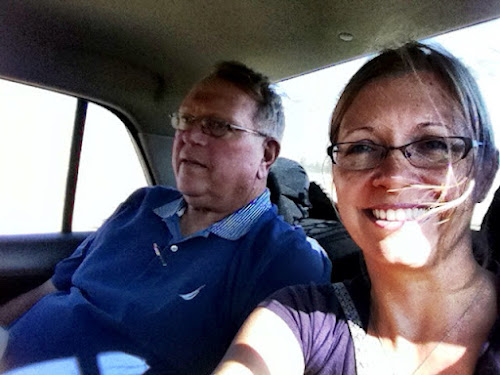
Tonight we have been relaxing in an incredible resort (thanks again, Chris), drinking coca tea and pisco sours. I'm looking forward to a wide-open, transportation-free itinerary tomorrow. No boats, no cars, no busses, no airplanes. Maybe an alpaca ride would be cool. On Sunday, we will add one mode of transportation to our list when we take a train to Machu Picchu. In the meantime, I'll try to post some pictures of what we've seen of this fascinating country.